Half the puzzles in a room end at a lock. Knowing exactly what each lock wants, and how to enter a code without fumbling, saves real minutes. Here is every common type, with the clues that usually go with it.
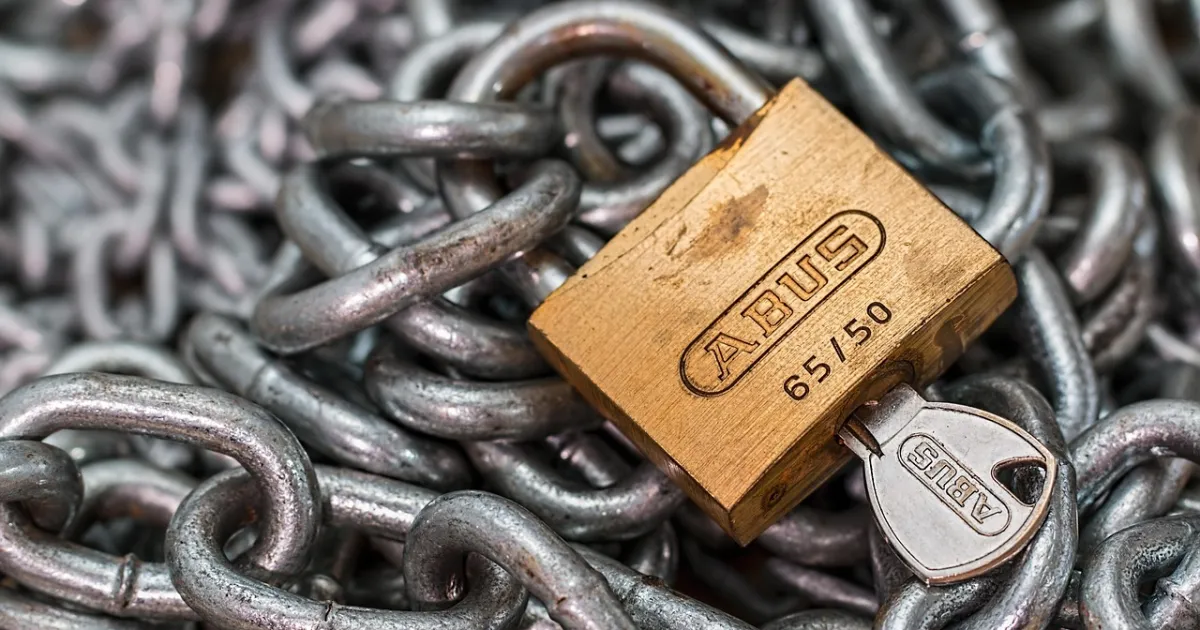
Most puzzles in an escape room end in a lock. The lock tells you a lot about the answer: how many digits, whether it is a word or a direction, whether you need a key at all. Learn to read escape room locks and you will match clues to locks far faster.
Number locks
The most common lock in any room. Usually three or four dials, sometimes five. Some are combination padlocks with a rotating dial instead.
- The code comes from: counting objects, dates, clock times, page numbers, a sum, a cipher that turns letters into numbers.
- How to enter it: line the digits up on the mark or line on the lock body, then pull the shackle firmly. Many teams have the right code and simply do not pull hard enough.
- Tip: if a three-digit code is not working, try it in reverse and check you have not read a 6 as a 9.
Word (letter) locks
Dials with letters instead of numbers, usually four or five. Each dial only has some of the alphabet, which is itself a clue: if a dial has no E, the word cannot have an E in that position.
- The code comes from: a riddle answer, highlighted letters, a cipher, the first letters of a list.
- Tip: say the number of letters out loud so everyone knows to look for a four- or five-letter word.
Directional locks
A lock with a joystick-like knob you push up, down, left and right in a sequence. It can take any length of sequence, which makes it hard to brute force.
- The code comes from: arrows, a map route, footprints on the floor, a maze, a compass rose, a dance diagram.
- How to enter it: reset it first (often by squeezing the shackle), then push each direction firmly until it clicks. Ask one person to read the directions while another enters them.
Color and symbol locks
Dials with colors or shapes. They ask for an order rather than a value.
- The code comes from: a row of colored objects, a legend, stained glass, flags, a sequence that lights up.
Key locks
The oldest lock in the game: find the key, open the lock. Rooms often contain several keys and several locks, so try each key on each lock once and keep track.
- Tip: when a key has opened its lock, leave it in the lock. That tells the team the lock is done and the key is used.
Push-button and keypad locks
Mechanical buttons or an electronic keypad, sometimes with letters as well as numbers.
- How to enter it: some mechanical button locks need a reset before each attempt, often by turning a knob or pressing a clear button. Electronic keypads may need an enter or hash key.
- Tip: on button locks the order may not matter, only which buttons are pressed. Read the briefing or ask.
Magnetic locks and hidden triggers
Modern rooms often have no visible lock at all. A magnet holds a door shut until a sensor detects the right event: an object placed on a stand, a switch flipped, a code entered on a panel, a light shone at a sensor. When something opens "by itself", look at what you just did.
Common codes and how they are hidden
| Code type | Example | Fits |
|---|---|---|
| Number alphabet | C-O-D-E = 3-15-4-5 | Number or word locks |
| Phone keypad | CODE = 2633 | Number locks |
| Letter shift | FRGH shifted back 3 = CODE | Word locks |
| Roman numerals | XIV = 14 | Number locks |
| Clock times | Hands at 3, 7, 1, 9 = 3719 | Number locks |
| Morse code | Long and short marks | Number or word locks |
For the puzzles that lead up to these locks, see our guide to the 12 types of escape room puzzles. The lock decoder on our home page is a quick version of this guide.
Lock etiquette
- Do not try to force or pick locks. They are props, and breaking one can end your game.
- Do not guess combinations at random. It wastes time and, on some electronic locks, triggers a lockout.
- Announce every lock you open.
Questions
What is the most common lock in escape rooms?
The number combination lock, usually with three or four digits.
How do directional locks work?
You push the knob in a sequence of directions. The lock accepts sequences of any length, so you need the full sequence from a clue.
Why will my combination lock not open with the right code?
The digits may not be aligned with the marker, the shackle may need a firm pull, or the code may need to be entered in a different order. Try once more slowly before looking for another code.
Can I use locks from a hardware store for a DIY escape room?
Yes. Resettable number and letter locks are cheap and perfect for home games. Our DIY guide shows how to use them.