Three kitchen-table recipes for invisible ink, each with its own way of revealing the message: warm air, grape juice or watercolor. Plus the chemistry in plain words and ideas for hunts and escape games.
Invisible ink is any liquid or mark that cannot be seen on the page until you do something to it. You can make three kinds at a kitchen table: lemon juice, which turns brown when the paper is warmed; baking soda in water, which shows up when you paint grape juice over it; and white crayon, which appears under a wash of watercolor. None of them needs a flame or anything from a chemistry set.
Three methods side by side
| Ink | Write with | Reveal with | Good to know |
|---|---|---|---|
| Lemon juice with a few drops of water | Cotton swab or small brush | Warm air from a hair dryer | Must dry completely first; the writing turns brown |
| Baking soda mixed with water | Brush or cotton swab | Grape juice painted over the page | No heat at all; the writing comes up darker than the juice around it |
| White crayon | The crayon, pressed hard | Watercolor paint | Works at once, with nothing to dry; easiest for small children |
Lemon juice and warm air
- Squeeze half a lemon into a small bowl and stir in a few drops of water.
- Dip a cotton swab or a fine brush and write on plain white paper. Use light strokes; a soaked page wrinkles and gives the secret away.
- Let the page dry completely. The writing disappears as it dries, which takes a few minutes.
- Warm the paper with a hair dryer, moving it over the writing until brown letters appear.
A warm radiator also works, and an adult can press the dry sheet with a warm iron. Do not use a candle, a lighter, a stove burner or a bare bulb held against the page. Stop as soon as you can read the message: the aim is to brown the writing, not the paper.
The University of Oxford's chemistry outreach sheet for this experiment explains the color like this: lemon juice contains citric acid, a carbon-based molecule that starts to break down when heated, and the exposed carbon reacts with oxygen in the air. On that account, the oxidation is what darkens the paper where the juice was. Not every reference tells it the same way: Wikipedia's article on invisible ink puts the browning down to the juice's organic acids reacting with the paper under heat, so treat this as the simple version. Scientific American's version of the activity adds that the juice of most fruits contains such carbon compounds, and it suggests testing apple juice or vinegar as well. Milk is another old heat-developed ink, used in the same way.
Baking soda and grape juice
- Mix 4 level tablespoons of baking soda thoroughly into 60 mL of water, about a quarter of a cup. That is the recipe on the Oxford sheet.
- Write with a brush or a cotton swab.
- Let the page dry completely.
- Brush purple grape juice across the whole page. The hidden writing comes up darker, purple to blue, against the juice around it.
The Oxford sheet explains this reveal as an acid meeting a base. Grape juice is acidic and gets its color from a pigment called anthocyanin, which works as a natural indicator: its shape, and with it its color, shifts between acidic and basic surroundings. Baking soda is a base. When the water in your ink evaporates it leaves small white crystals of baking soda on the paper, and the juice that lands on them is pushed toward the basic side and darkens.
This is the method to choose when there is no adult around to handle heat. Grape juice stains, so cover the table.
White crayon and watercolor
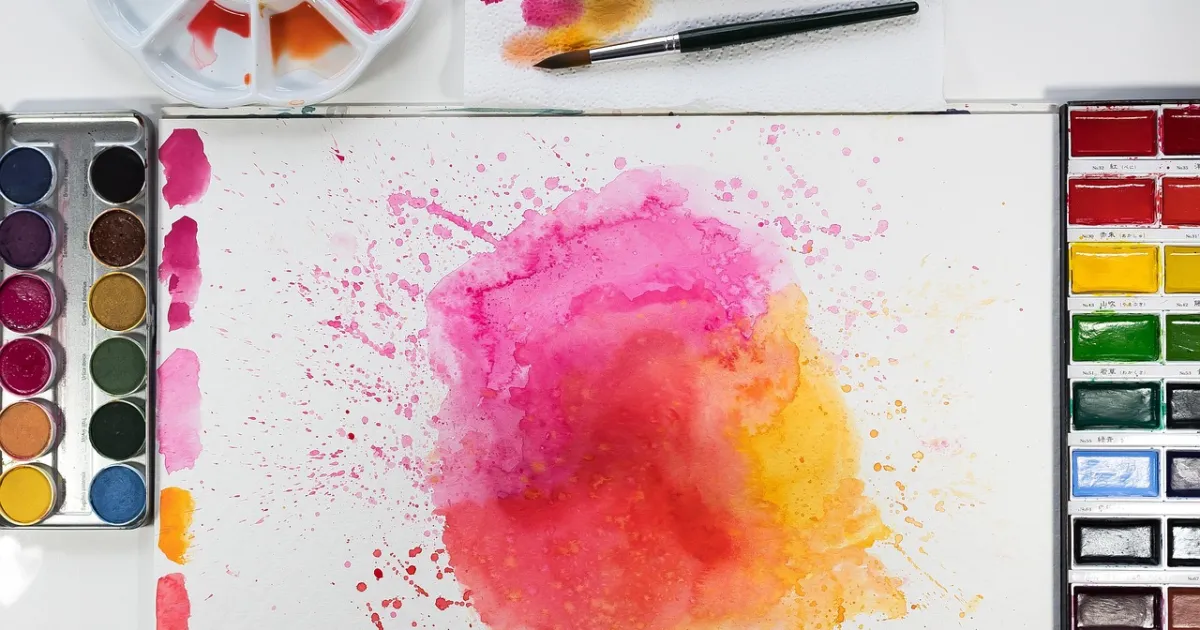
Write or draw with a white crayon on white paper, pressing hard, then brush watercolor paint over the page. The paint soaks into the bare paper and slides off the wax, and the message stands out in white. Science World, the Vancouver science center that publishes this as a preschool activity, puts the reason simply: water wets paper but will not stick to wax or oil. Two tips from the same page: washable crayons do not work, and pale crayon under dark paint gives the strongest effect.
It is less of a secret than the other two, because the waxy lines can catch the light when someone tilts the page. For a party of five-year-olds that hardly matters, and nothing has to dry.
Keeping the message hidden
- Use ordinary matte paper. Glossy or very smooth paper does not let the ink sink in, and it stays visible on the surface.
- Thin the ink. A dilute ink leaves less of a mark, and undiluted juice dries shiny or dull enough to spot in slanting light.
- Write a decoy. An ordinary pencil note or a drawing on the same sheet explains why the paper exists, and the secret goes in the empty space around it.
- Make a test strip with the same paper and ink before the real one, and develop it, so you know how much warmth or juice it takes.
Using invisible ink in a game
In a home escape game or a hunt, the secret message is only half of the puzzle. The other half is working out how to reveal it, and that is where the design choices are.
- Make the reveal tool a find of its own: a hair dryer in a locked box, a small bottle of grape juice with a tag that says "for the blank page", a paintbox in a drawer.
- Hint that a blank sheet matters. A page that is numbered, signed or sealed in an envelope tells players to keep it; a plain blank sheet gets thrown away.
- Each sheet works once. Prepare a spare for every message, and a fresh set if the game will be played twice.
- Prepare lemon and baking soda messages the day before so that they are fully dry.
- With children, an adult runs the hair dryer. The crayon version has no heat in it, so they can do every step themselves.
- For a harder puzzle, hide a coded message instead of plain words. The symbols of the pigpen cipher are easy to paint with a brush.
Shops also sell marker pens whose ink glows under an ultraviolet lamp; they do the same job with less mess. For the rest of the setup, see how to make an escape room at home, and for a map-and-treasure game where a secret message fits naturally, our treasure hunt for kids.
A very short history
Secret writing is much older than the lemon trick. Wikipedia's history of the subject starts in the 4th century BC, when Aeneas Tacticus mentioned an invisible ink in a work on how to survive a siege, and it says the Roman writers Pliny the Elder and Ovid advised using plant juices and milk. During the American Revolution George Washington hired Dr. James Jay to create a secure invisible ink, according to the International Spy Museum. In the United States the subject stayed officially secret for a surprisingly long time: the six oldest classified documents held by the government, dated 1917 and 1918 and describing secret writing techniques, were declassified by the CIA only in 2011.
Questions
How do you make invisible ink at home?
The simplest recipe is lemon juice thinned with a few drops of water. Write with a cotton swab, let the paper dry, then warm it with a hair dryer until the writing turns brown.
Why does lemon juice work as invisible ink?
The juice dries almost colorless. The explanation given by the University of Oxford's chemistry outreach sheet and by Scientific American is that it contains carbon-based compounds such as citric acid: heat breaks them down, and the carbon that is freed reacts with oxygen in the air and turns brown. Other references describe the chemistry differently.
Can you reveal invisible ink without heat?
Yes. A message written in baking soda and water appears when grape juice is brushed over it, and white crayon appears under watercolor paint. Neither needs any heat.
What paper is best for invisible ink?
Plain white, uncoated paper. Glossy and very smooth papers keep the ink on the surface, where it can be seen.