A table quiz, Kim's Game, bingo and a Secret Santa with a guessing round, with rules in order and a simple test for any game you are thinking of running at work.
Office party games work when everyone can play from a chair, nobody has to touch a colleague or reveal anything private, and nothing depends on drinking. Four games pass that test for a group that mixes ages, abilities and pay grades: a table quiz, the tray memory game, bingo and, in December, a Secret Santa with a guessing round. The rules for each are below, after a quick look at where the test comes from.
The test an office game has to pass
People who advise employers are blunt about party games. In a 2023 article on holiday parties from the US HR association SHRM, Philippe Weiss, managing director of the law firm subsidiary Seyfarth Shaw at Work, told companies to forget games built on personal secrets, bodies twisted into odd positions or touching, and warned that party games in general carry risks nobody can foresee. Another voice in the same article made the case for planned activities. An HR director quoted there said that something organized, a gift exchange was her example, breaks up the trips to the bar and fills half an hour to 45 minutes with something closer to team building.
The CIPD, the British professional body for HR, adds two points in its tips for employers from 2019. Some staff do not celebrate Christmas and some do not enjoy parties, so nobody should be made to come. And the organizer should weigh the timing, the venue and how accessible it is, and have drinks without alcohol on offer.
From that advice we draw our own five-part test for any game at work:
- It can be played sitting down.
- It involves no touching.
- It asks for no personal stories or secrets.
- Alcohol is neither the prize nor the penalty.
- Anyone can sit it out without explaining.
A table quiz
For any number, in teams of four to six. You need answer sheets, pens, a list of questions and, in a large room, a microphone. Allow 30 to 45 minutes. It is the pub quiz format without the pub.
- Form teams by table and mix the departments. Each team chooses a name and writes it on every sheet it hands in.
- The quizmaster reads the questions in themed rounds. Four rounds of ten questions is plenty for a party.
- Teams confer quietly and write their answers. Phones stay in pockets.
- After each round, teams pass their sheet to the next table for marking while the quizmaster reads the answers.
- The highest total after the last round wins.
Balance the rounds so that no age group owns the quiz: general knowledge, music with one song from each decade, a picture round on a handout that tables work on during the break, and a round of anagrams or word puzzles. A round about the company itself, its history and its building, lets long-serving staff shine without making anything personal. For a variation, let each team play a joker: before the quiz starts, it names one round in which its points will count double.
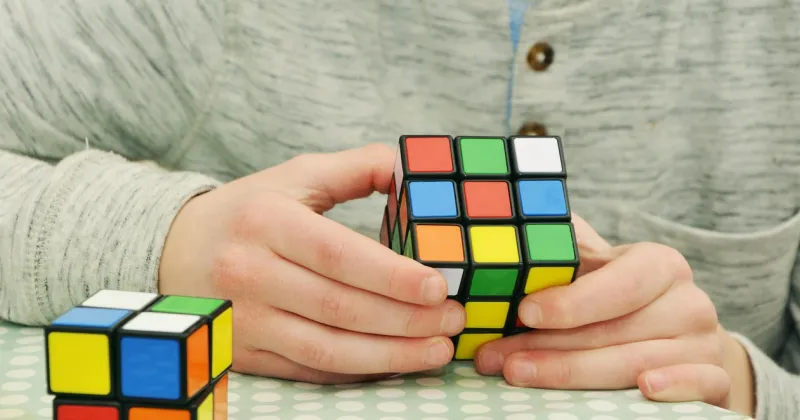
Kim's Game, the tray memory test
For any number, in pairs or table teams. You need a tray, 12 to 15 small objects, a cloth, paper, pens and a timer. About 10 minutes. The name comes from Rudyard Kipling's 1901 novel Kim, whose young hero is trained with it, and Robert Baden-Powell wrote it up for Scouts in his book Scouting Games.
- Out of sight, arrange the objects on the tray and cover them with the cloth. Baden-Powell's advice was to stop at about fifteen while the game is new to the players.
- Put the tray where every team can see it and lift the cloth for one minute.
- Cover the tray again. Teams write down every object they can remember.
- The longest correct list wins.
Raid the supply cupboard for the objects: a stapler, a mug, a key card, a roll of tape, one thing that plainly does not belong. In a big room, photograph the tray and put the picture on the screen for a minute. For a second round, show the tray, take it away, secretly remove one object and bring it back. The first team to name what is missing wins.
Bingo
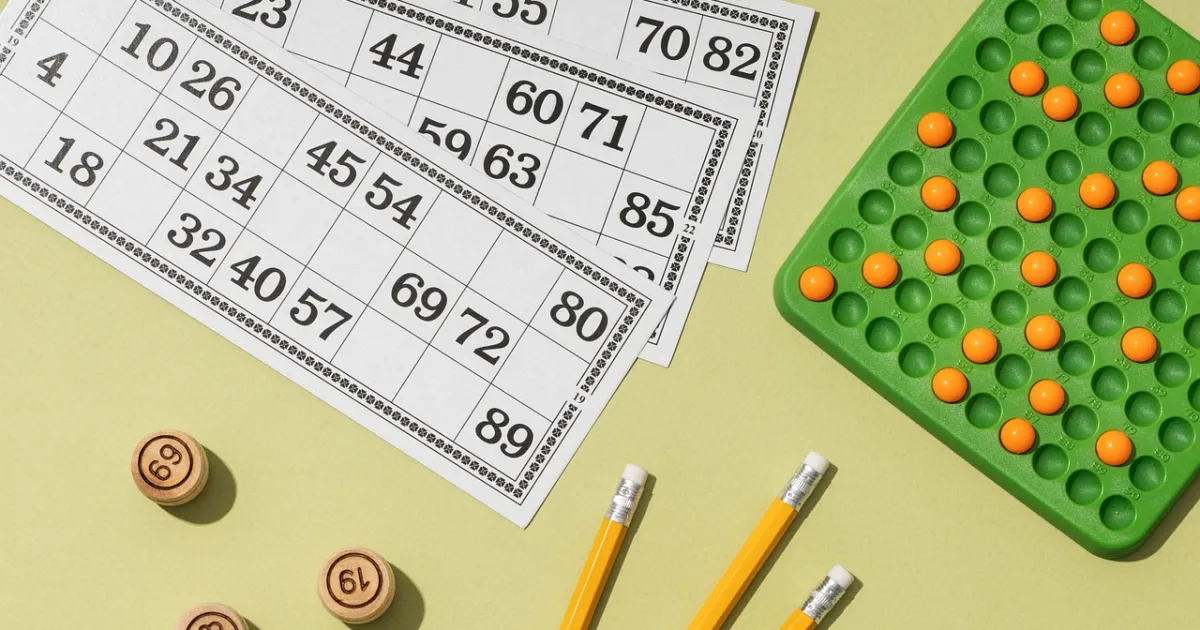
For any number. You need a bingo set, which means numbered balls or a random number caller, a card for each player and pens. About 10 minutes a game.
- Each player takes a card: a grid of five squares by five with numbers in every square but the center, which is free.
- The caller draws numbers at random and announces them.
- Players mark each called number that appears on their card.
- The first player to complete a line across, down or diagonally calls "Bingo!" The caller checks the card against the numbers drawn.
- Hand out fresh cards and start a new game.
In the standard American game the numbers run from 1 to 75 and the columns are headed B, I, N, G and O. The B column holds numbers from 1 to 15, I from 16 to 30, N from 31 to 45, G from 46 to 60 and O from 61 to 75. Bingo is pure chance, and that is its strength at work: the newest hire has the same odds as the chief executive. Two variations stretch a session. Play for the four corners, or play a cover-all game, where the winner is the first to mark the whole card.
Play for small prizes and charge nothing for cards. Bingo played for money is regulated, with rules that vary by state, so check locally before turning it into a paid fundraiser.
For the December party: Secret Santa with a guessing round
For everyone who opts in. It needs a hat for the draw two or three weeks ahead, an agreed price limit and 20 to 30 minutes at the party.
- Everyone who wants to take part puts their name in the hat. Make it easy to stay out.
- Each person draws a name in secret and buys a small gift for that colleague within the price limit.
- The giver labels the gift with the recipient's name and adds an unsigned note containing one hint about who the giver is.
- At the party, hand the gifts out. Each recipient opens theirs, reads the hint aloud and guesses who the Santa was.
- The giver owns up. In a variation, givers stay secret for good.
Ask for gifts that anyone would be glad to receive. If buying for one particular colleague feels awkward in your office, run a white elephant swap, where gifts go into a common pile. Its rules are in our Christmas party games for adults.
Which game for which party
| Game | Preparation | Time | Why it suits a mixed group |
|---|---|---|---|
| Table quiz | Write or collect 40 questions | 30 to 45 minutes | Teams pool what different generations know |
| Kim's Game | Collect a tray of objects | 10 minutes | No knowledge needed, only attention |
| Bingo | Borrow or print a set | 10 minutes a game | Pure chance, played seated |
| Secret Santa with guessing | Draw names weeks ahead | 20 to 30 minutes | Opt-in, and the guessing does the entertaining |
Running notes for a mixed group
Seat everyone, including the caller if they prefer. Use a microphone in any room bigger than a meeting room, and print answer sheets and bingo cards in large type. These small things decide whether the colleague with a hearing aid or a sore knee gets to play.
Keep the prizes neutral: chocolates, a plant, a gift card for coffee. A bottle as first prize leaves out everyone who does not drink.
Give out jobs. Scorer, caller, timekeeper and prize-giver are good roles for people who would rather help than compete.
Who Am I?, played around a table with famous names on labels that players stick on themselves without looking, passes the test too. Its rules are in our icebreaker games. And when the goal is a team that works better together, and not a party, look at team building games.
Questions
What games can you play at an office party without alcohol?
A table quiz, Kim's Game and bingo all run on tea and coffee. None of them uses a drink as a prize or a penalty, and all three are played sitting down.
What are good office Christmas party games?
Secret Santa with a guessing round is the classic, provided joining is optional and there is a price limit. A table quiz with one festive round and a white elephant gift swap also fit a December party.
What party games should an office avoid?
A workplace-training executive quoted by the US HR association SHRM in 2023 said to drop games built on personal secrets, bodies twisted into odd positions or touching. Drinking games fail our test as well.
How long should games last at an office party?
No rule exists. An HR director quoted in a 2023 SHRM article gave half an hour to 45 minutes as an example of what a planned activity takes up. One team game and one quick game of chance fill that comfortably.