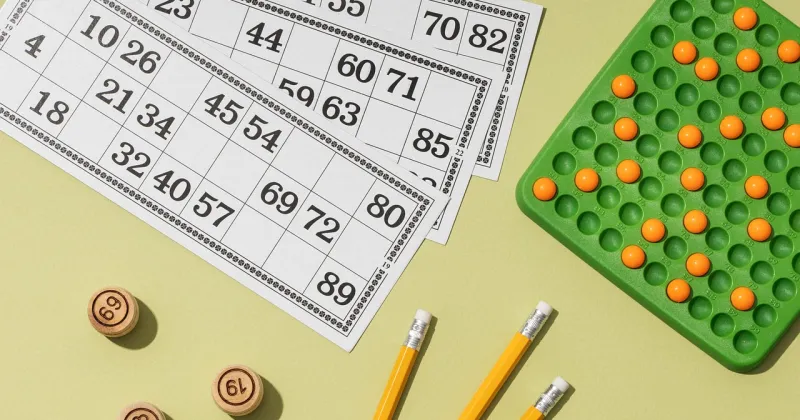
Five traditional games for a table of mixed ages, each with players, equipment and rules in order, plus a simple plan for the evening and ways to keep it fair for the youngest.
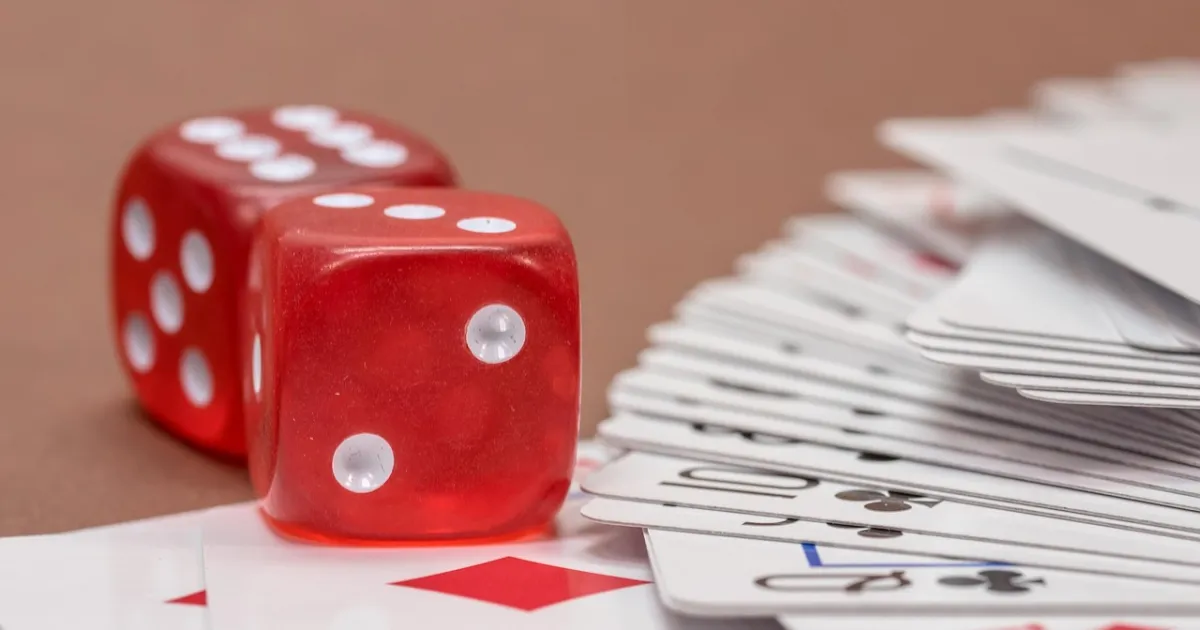
The family game night ideas that survive a table with a four-year-old, a teenager and a grandparent are the old ones: games you can explain in a minute and play with things already in the house. One deck of cards, one die, paper and pencils cover all five games below. Each is set out the same way, with players, equipment and the rules in order. After them come a plan for the evening and ways to even out the ages.
Five family game night games at a glance
| Game | Players | You need | What decides it | To make it shorter |
|---|---|---|---|---|
| Go Fish | 2 or more | A 52-card deck | Memory and luck | Stop when the stock runs out |
| Crazy Eights | 2 to 5 or more | A 52-card deck | Luck and a little planning | Play single hands, no scoring |
| Concentration | Any number, even one | A deck and a clear table | Memory | Lay out fewer cards |
| Pig | 2 or more | One die, paper, pencil | Luck and nerve | Lower the target score |
| Dots and Boxes | 2, sometimes more | Paper and pencil | Planning, with no luck at all | Draw a smaller grid |
Three card games
Go Fish
Bicycle, the playing-card maker, lists Go Fish for ages 4 and up. The aim is to collect the most books, a book being all four cards of one rank.
- Deal seven cards each to two or three players, five each to four or five. The rest go face down in the middle as the stock.
- The player to the dealer's left asks one opponent by name for a rank: "Sam, give me your kings." You may only ask for a rank you already hold.
- If Sam has any kings, he hands over all of them and the asker goes again.
- If he has none, he says "Go fish!" The asker draws the top card of the stock and the turn passes to the left.
- A player who completes a book shows it, lays it face up and plays again.
- A player left with no cards draws one from the stock on their turn and asks for that rank. If the stock is gone, that player is out of the game.
- When all thirteen books are on the table, the player with the most wins.
Crazy Eights
Also listed by Bicycle for ages 4 and up. The first player to get rid of every card wins the hand.
- Deal five cards each. Put the rest face down as the stock and turn its top card face up beside it to start the pile. If that card is an eight, bury it in the stock and turn another.
- Starting at the dealer's left, each player lays one card on the pile. It must match the top card in suit or in rank: on the seven of hearts you may play any heart or any seven.
- Eights are wild. You may play one on anything, and you name the suit the next player has to follow.
- If you cannot play, draw from the stock until you can. Once the stock is gone, you pass. If the stock is gone and nobody can play, our house rule is to end the hand there.
- For a longer game, score each hand. Bicycle's rules give the winner 50 points for every eight left in the other hands, 10 for each king, queen, jack or ten, 1 for an ace and face value for the rest.
Concentration
Wikipedia's entry says the game suits young children especially well while still giving adults a challenge, which is exactly what a mixed table needs. It is also known as Memory or Pairs, and commercial sets with pictures in place of ranks exist.
- Shuffle a deck and lay every card face down. The usual layout for 52 cards is four rows of thirteen.
- On your turn, flip any two cards face up where they lie.
- If they match, take the pair and go again. In the standard rules a match is the same rank and the same color, such as the six of hearts and the six of diamonds. Agree beforehand if any two cards of one rank will do.
- If they do not match, turn them face down again in the same spots. Play passes to the left.
- When the last pair is taken, the player with the most pairs wins.
A dice game: Pig
Pig needs one die and somebody to keep score. Wikipedia traces its first printed description to John Scarne in 1945 and notes that mathematics teachers use it to teach probability.
- On your turn, roll the die as often as you like and add up what you roll.
- Roll a 1 and you score nothing for that turn. Pass the die.
- Stop before that happens, which is called holding, and the turn's total goes onto your score.
- The first player to reach 100 wins.
The whole game is one decision: roll again, or hold.
A pencil game: Dots and Boxes
This one was first published in the 19th century by the French mathematician Édouard Lucas. It is a game for two, though more can join.
- Draw a square grid of dots. Three dots by three, which makes four boxes, is enough for learning or for a quick game; the grid can be any size.
- Take turns drawing one line, across or down, between two neighboring dots.
- Whoever draws the fourth side of a box writes an initial inside it, scores a point and takes another turn.
- When no lines are left to draw, the player with the most boxes wins.
A first piece of strategy for beginners: avoid drawing the third side of any box, because the next player will close it.
How to plan the evening
Plan on three games and give each a job. A shape that works at our table:
- Open with luck. Pig or Crazy Eights gets everyone playing at once, latecomers included.
- Put the thinking game in the middle, while the youngest are still fresh: Concentration with the full deck, or a Dots and Boxes knockout played in pairs.
- Close with the game the youngest player chooses.
- Keep one score sheet for the night and let the smallest reliable writer hold the pencil.
Keeping it fair across ages
Letting children run the game is part of the point. The American Academy of Pediatrics, summarizing its clinical report on play, says research links play to better planning and organizing, getting along with others and managing emotions. That statement is about play in general, not about card games; handing over the dealing, the adding up and the reading of rules is our own way of acting on it. Adjust the games instead of throwing them.
- Pair the youngest player with an adult as one team, with the child holding the cards.
- In Concentration, lay out only the aces to sixes for a first game, then add ranks.
- In Pig, let young children win at 50 while adults need 100.
- In Dots and Boxes, give the younger player the smaller grid and the first move.
- In Go Fish, let a new reader play with cards face up on the table for the first hand.
When you want something bigger
Traditional games also come in boxes. Picture-card versions of Concentration and Pass the Pigs, a commercial relative of two-dice Pig, are two examples of a type, not shopping advice. For games that suit a bigger, louder group, see our party games for adults. To give the night a story and a finish line, try one of the boxed or printable escape room kits, and keep a few riddles for kids ready for the gaps between rounds.
Questions
What games can a family play with just a deck of cards?
Go Fish, Crazy Eights and Concentration all use one standard 52-card deck and nothing else. Go Fish and Crazy Eights are listed by Bicycle for ages 4 and up.
What is a good family game night game for young children?
Concentration is a strong choice, since matching pairs depends on memory, not reading or arithmetic. Pig also works, because the only decision is whether to roll again.
What do you need for a family game night at home?
A deck of cards, one die, paper and pencils are enough for all five games on this page. Add a clear table and one sheet for the scores.
How do you play the dice game Pig?
Roll one die as many times as you like and add up the rolls. If you roll a 1, the turn scores nothing; if you stop first, the total is banked. The first player to 100 wins.